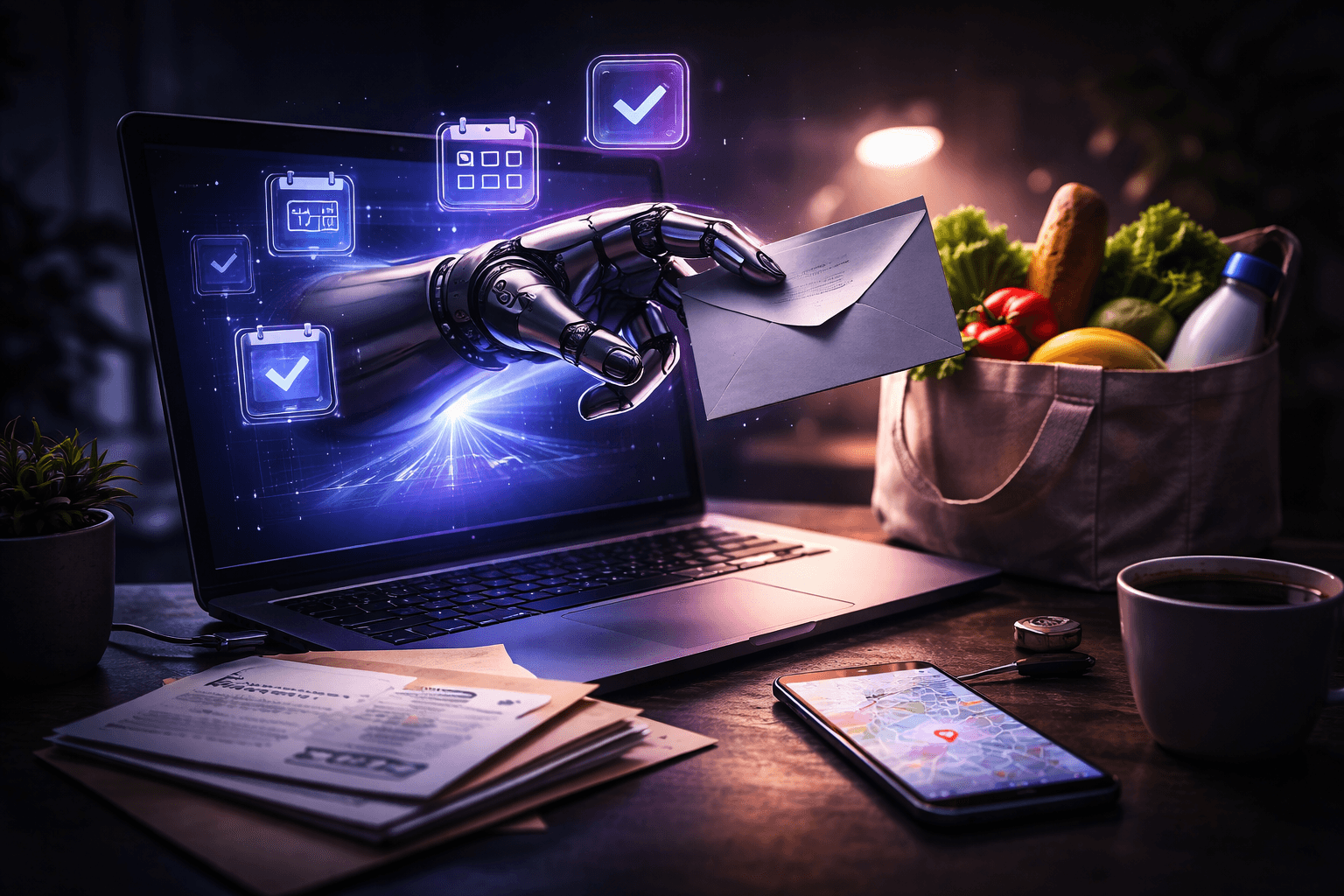
I had an AI book a dentist appointment last week. Not through an app. Not through an online form. It called the office, talked to the receptionist, confirmed a time that worked with my calendar, and texted me a confirmation.
I didn't touch my phone once.
A year ago this was a keynote demo. Now it's something you can actually use on a Tuesday afternoon because you've been putting off that call for three weeks. Multiple companies have shipped AI agents that handle real tasks — booking, returning purchases, comparing prices, scheduling.
And honestly? It's weird. Not bad weird. Just a shift.
What changed
The big thing isn't that AI got smarter at talking. It's that these systems can now do things. Click buttons. Fill out forms. Navigate websites. Make phone calls where the person on the other end doesn't know they're talking to software.
Google, OpenAI, and a bunch of startups are all racing here. The pitch is always the same: tell the AI what you need, it figures out the steps, it handles it.
I'm cautiously into it
The dentist thing saved me 15 minutes of hold music. That's real. For someone who puts off phone calls the way I do, having something just handle it is a genuine quality of life upgrade.
But I watched it do it. I didn't just fire and forget. Because right now, these things are good enough to be useful and not good enough to fully trust. They'll book the wrong time. They'll misunderstand a question. They'll confidently do the wrong thing and not flag it.
It's like having a very eager intern. Helpful, fast, needs supervision.
Try it for something low-stakes. A restaurant reservation. A price comparison. See how it feels. But keep your eyes on it. We're in the "trust but verify" phase, and that's exactly where we should be.